
14 September 2026
Making the Most of Unusual Spaces: Turning Lost Space into Useful Space
Under the stairs, in awkward corners and in unused cellars, most homes hide pockets of space waiting to be transformed. With thoughtful design, these overlooked areas can become practical, attractive and genuinely useful parts of the home.
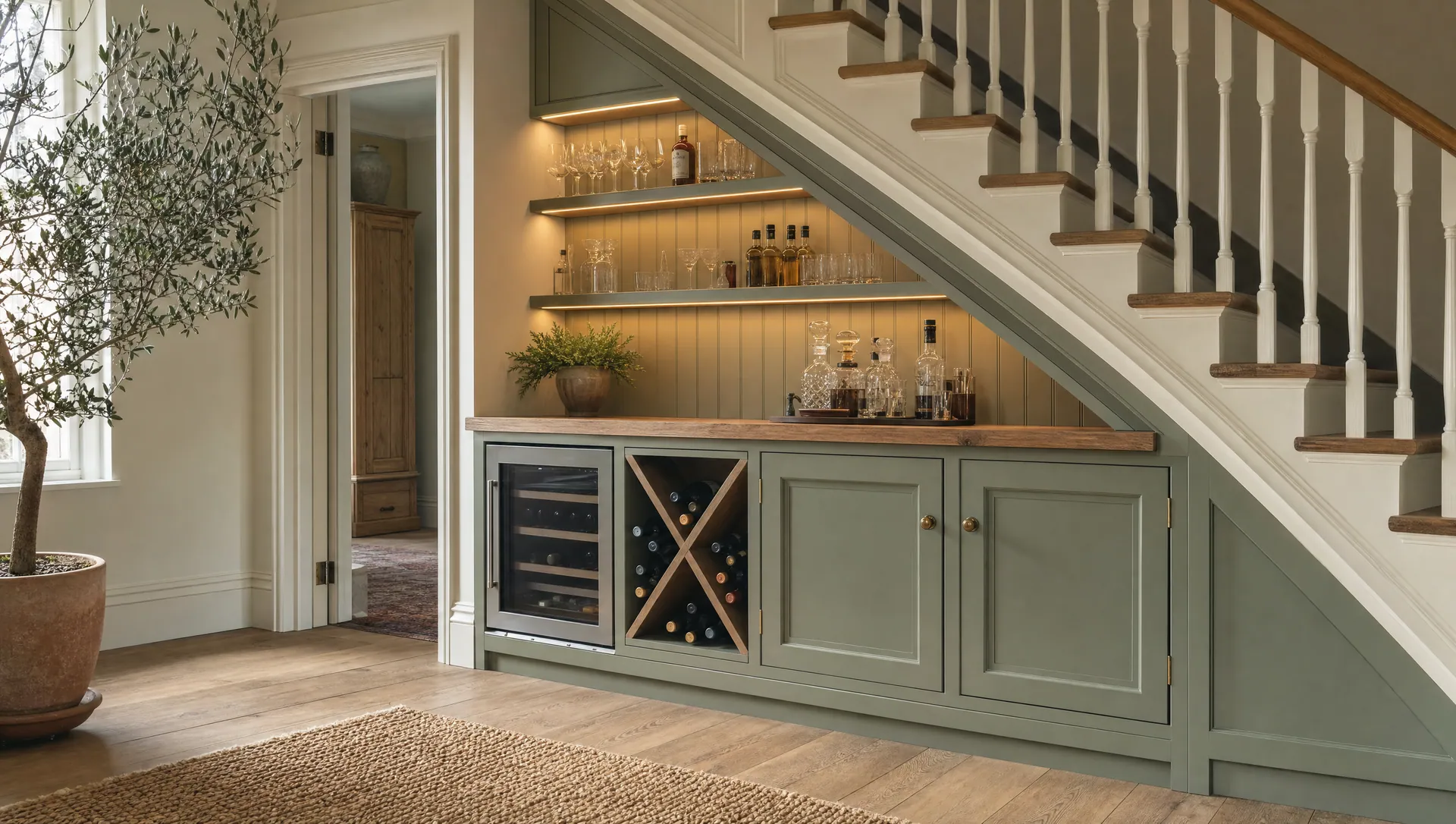
When we think about making the most of our homes, we often focus on the obvious areas: extending the kitchen, converting the loft, or adding another bedroom. But some of the most valuable opportunities can be found in the spaces we barely notice.
Under the stairs, beneath the floor, in awkward corners, and even in unused cellars, there are often pockets of space waiting to be transformed. With a little creativity and thoughtful planning, these unusual areas can become practical, attractive, and highly useful additions to a home.
The Space Under the Stairs
The area beneath a staircase is one of the most commonly overlooked spaces in a house. It can easily become a dumping ground for shoes, coats, cleaning products and miscellaneous household items.
However, with clever design, it can become almost anything.
Built-in cupboards can provide valuable storage without taking up additional floor space. A compact home office can fit beneath a staircase, while shelving can turn the area into a small library or display space. In larger homes, the space could even become a downstairs cloakroom.
The key is to design storage around the shape of the staircase rather than trying to force standard furniture into the space.
Creating a Wine Cellar
For homes with a basement or cellar, unused underground space can provide an excellent opportunity to create a dedicated wine cellar.
A wine cellar doesn't necessarily need to be enormous. Even a relatively small area can be transformed with suitable wine racks, controlled temperature and humidity, and appropriate lighting.
Beyond simply storing bottles, a wine cellar can become an attractive feature of the home. Glass doors, timber shelving and carefully positioned lighting can create a sophisticated space while making use of an area that might otherwise remain neglected.
For anyone considering a wine cellar, environmental conditions are particularly important. Wine is sensitive to temperature, light, vibration and humidity, so the space should be assessed properly before installation.
Awkward Corners
Every home has them: the narrow corner that doesn't seem large enough for furniture, the space beside a chimney breast, or an oddly shaped section of hallway.
These areas can often provide surprisingly useful storage.
Floating shelves, fitted cupboards and bespoke furniture can make use of dimensions that off-the-shelf products cannot accommodate. A narrow alcove could become a bookcase, a display cabinet, or even a small workstation.
Instead of asking, “What furniture will fit here?”, it can be more useful to ask, “What could this space be used for?”
Forgotten Spaces in the Kitchen
Kitchens often contain small gaps that are overlooked during the original design. The space between cabinets, above cupboards or underneath units can potentially provide additional storage.
Pull-out pantry systems are particularly useful in narrow gaps. Deep drawers can make better use of low-level space, while high-level cupboards can store items that are used less frequently.
Even the area above kitchen cabinets can sometimes be used for display or storage, provided it is designed to remain accessible and easy to clean.
Turning a Cellar into More Than Storage
An unused cellar doesn't have to remain a dark storage area.
Depending on the size, condition and regulations affecting the property, a cellar could potentially become a utility room, home office, hobby room, entertainment area or wine storage space.
However, below-ground spaces require careful consideration. Damp, ventilation, natural light, ceiling height, insulation and access should all be assessed before undertaking a conversion.
What initially looks like an unusable basement could become one of the most interesting spaces in the house.
Small Spaces Can Make a Big Difference
Making use of unusual spaces isn't necessarily about creating large new rooms. Often, the biggest benefit comes from solving everyday storage problems.
A cupboard under the stairs might remove clutter from the hallway. A carefully designed alcove could provide a much-needed desk. A cellar could provide dedicated storage and free up valuable space elsewhere in the home.
These improvements can also help a property feel more thoughtfully designed because they make use of areas that would otherwise be wasted.
Think Creatively About “Lost” Space
The next time you walk around your home, look beyond the rooms themselves. Look underneath, above and between them.
Ask yourself:
- Is there unused space beneath the stairs?
- Could an awkward alcove become useful storage?
- Is the cellar being used to its full potential?
- Could a narrow gap accommodate bespoke shelving?
- Are there areas currently collecting clutter that could be redesigned?
- Could built-in furniture make better use of an unusual shape?
The most interesting improvements are sometimes found in the places we stop noticing.
Making Every Inch Count
A well-designed home isn't necessarily the one with the most square footage. It is often the home that makes the best use of the space it already has.
From understairs storage and hidden cupboards to wine cellars and cleverly designed alcoves, unusual spaces can be transformed into practical features that add character and functionality.
Instead of seeing these areas as “lost space”, consider them opportunities. With creative thinking and the right design, even the smallest or most awkward corner can have a purpose.